Dear, hopefully our exchanges will demystify your ghosts
Dear Wasteland,
I was sorry to find out that you’ve been haunted by the promises of pseudo-regeneration. Your symptomatic hauntedness seems indeed obsessively systemic. I hope the indication of those systems will lift some weight of ignorance curse you’ve been carrying.
Index of Megaprojects as Ghosts
TIME-BENDING
Appearing in the present but belonging to the past or the future: carried out by different tenures, discontinued generations of project leaders;
INVISIBILITY
Trucks moving mountains from secrete locations to fenced off construction sites, generating new traffic vessels. The presence is rather felt, than seen – ripples of influence affecting daily choreographies but the source remains hidden;
SUPRA-DIMENSIONALITY
Abundance of institutions and funding schemes – of budgets and complexity so viscid it becomes boundless; of scale that envelopes one rather than reveals itself;
HYDRA EFFECT
for every head chopped off, the Hydra would regrow two heads: by addressing singular programmatic issue, it responds with the multiplicity of entanglements.
How to catch something that hides itself? How to shape critical discourse that reveals the tale-like narratives of megaprojects? Perhaps a ritual can guide you out.
Part I, Helsinki
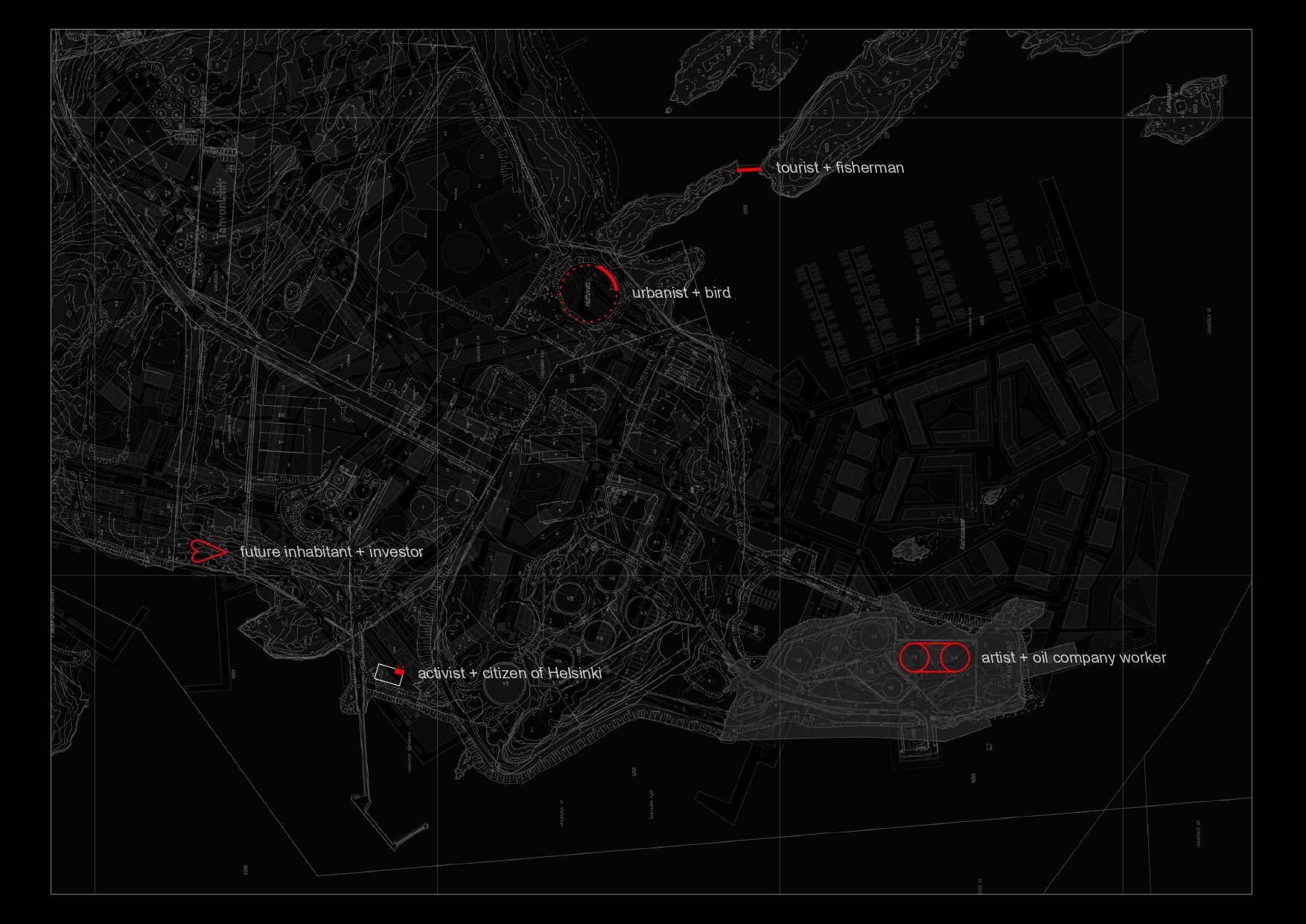
The Ghostbusters Score
The task description:
You were assigned to the discussion between an activist and a citizen of Helsinki. Your ghost is the masterplan of Kruunuvuorenranta for 13 thousand residents.
The Potentiality Permit
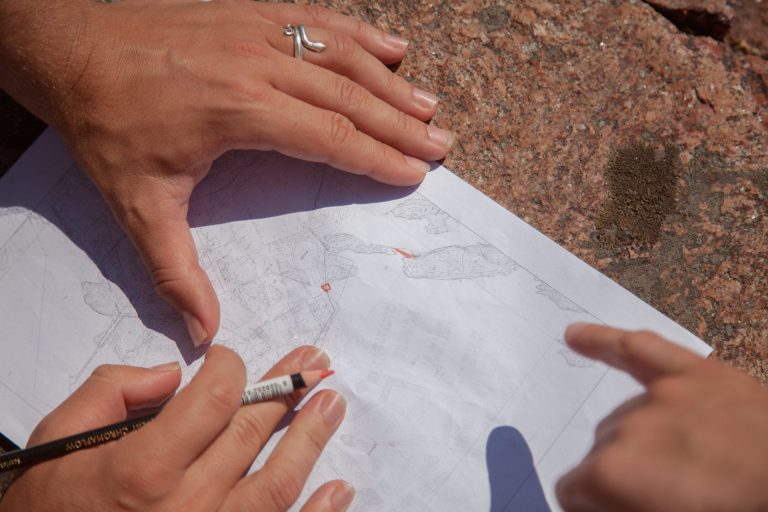
You are given authorization to imagine the potential of your chosen site outside of the assigned zoning plan. Permit for marking it in a way that seems adequate is granted by the rights to experimentation. You are requested to list the evaluation of the value you see within your territory and based on that, establish it. Mark your potentialities on the map, which will be translated into cadastral plan of potentialities.
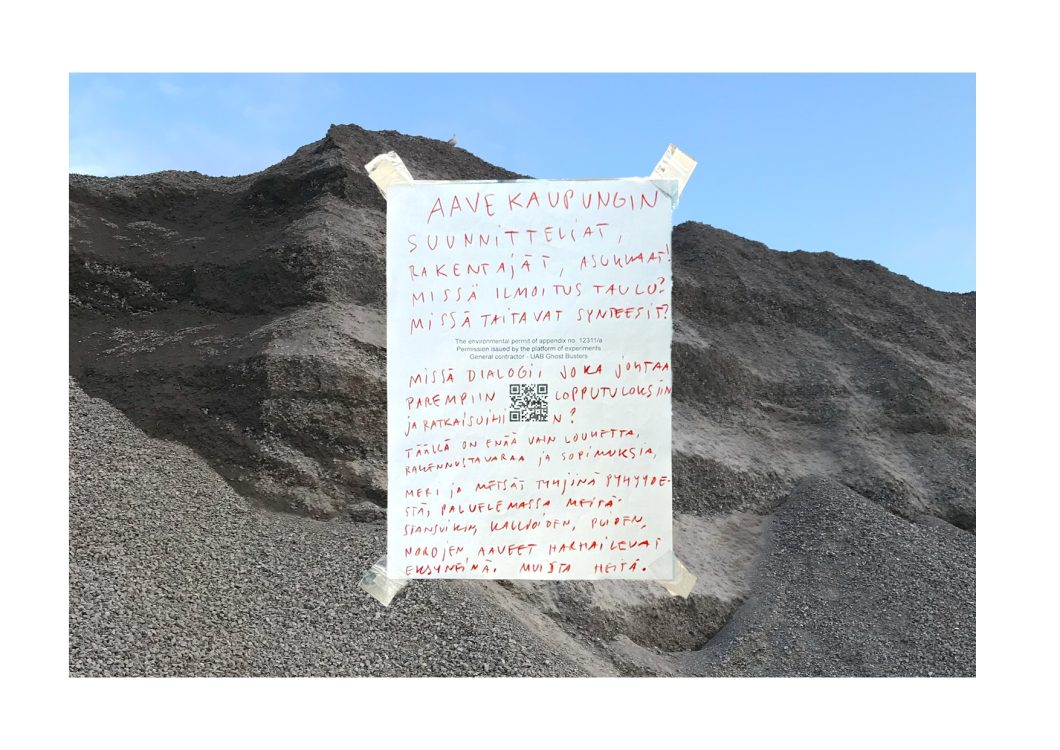
Written and published on a K-Market entrance by Tuomas Toivonen and Aistė Gaidilionytė
Translation: GHOST TOWN PLANNERS, BUILDERS, INHABITANTS!
WHERE IS THE NOTICE BOARD? WHERE ARE THE SKILLFUL SYNTHESES? WHERE IS THE DIALOGUE THAT LEADS TO BETTER OUTCOMES AND SOLUTIONS?
HERE, ONLY CRUSHED ROCK, BUILDING MATERIALS AND CONTRACTS REMAIN – THE SEA AND FOREST EMPTIED OF THE SACRED, SERVING US. THE GHOSTS OF STANSVIK, ITS CLIFFS, TREES AND BROOKS ARE WANDERING ABOUT, LOST. REMEMBER US.
Thanks to Descartes the spatial logic and parcellation has been informed of ignorance towards the situated realities. Drawing on this and further guided by the golden efficiency ratio, the neo-urbanism has shaped contextless realities – urban developments that multiply itself throughout the globe to a blissful oblivion of standardization.
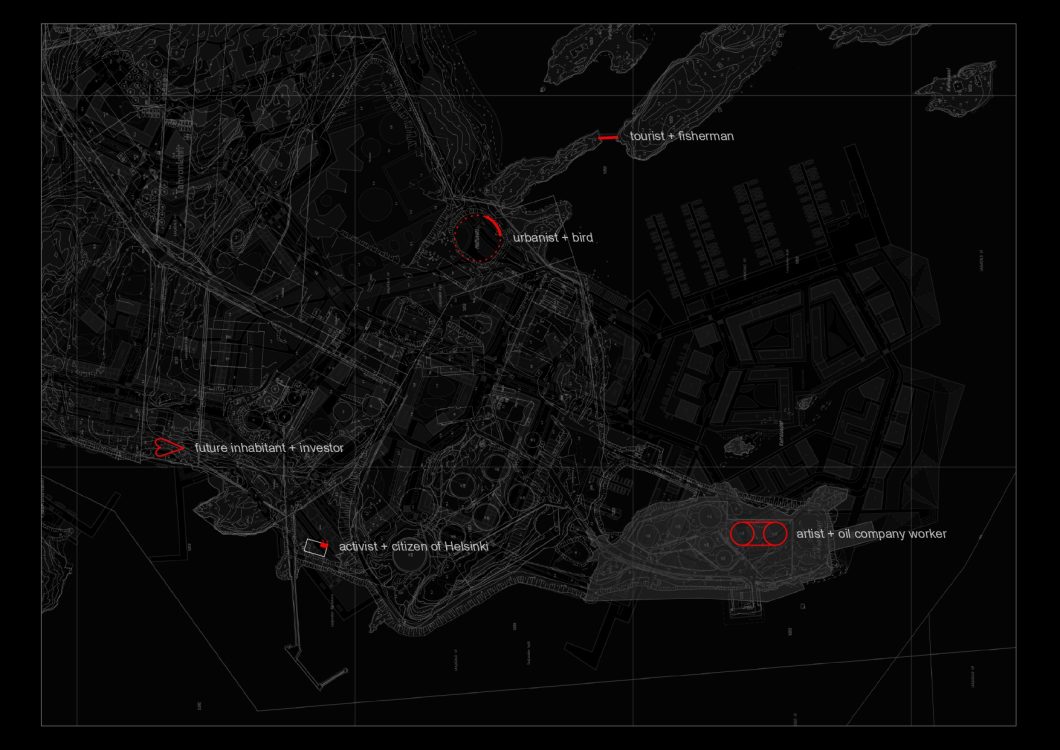
The new cadastral plan issued by Ghostbusters
Part II, Copenhagen
The Monopoly of the Baltic Sea
The urbanization of waterfronts and the sea space itself advocate for the growth. One of the cases can be found in Denmark – the seemingly green-driven Lynetteholm 2070 megaproject. It is a redevelopment project of an existing industrial-cultural site in the northern part of Copenhagen with an artificial island project as an extension. The catalyst and financial scheme behind is the Land Value Capture tax: pumping the territory with financial potential (luxurious housing developments, new infrastructure) that will eventually give returns via taxation. The project is standing on plurality of justification pillars, the all-in-one solution type of project that renders it untouchable. The abundance of arguments forms such an entirety from which it is impossible to separate a part. An exemplary hydra myth/project. It is supported by the official politicized renders – the visual rhetorics that promise the return of the national nostalgic natural landscapes or a vision of a never-ending growth of the city and hence the economic power.
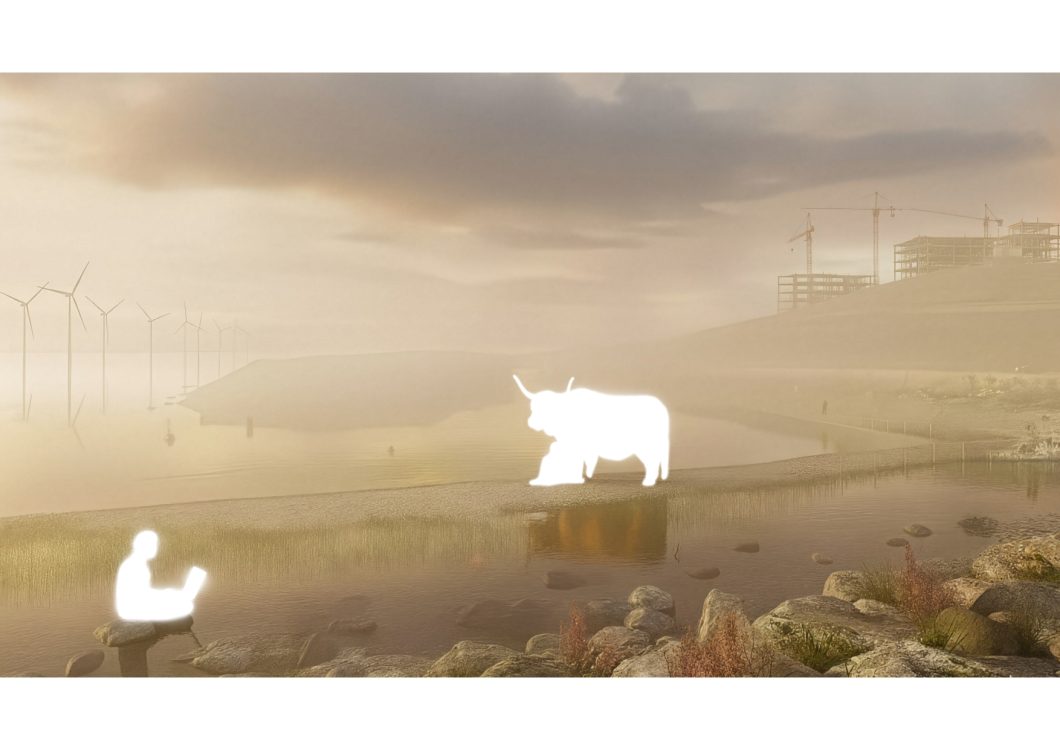
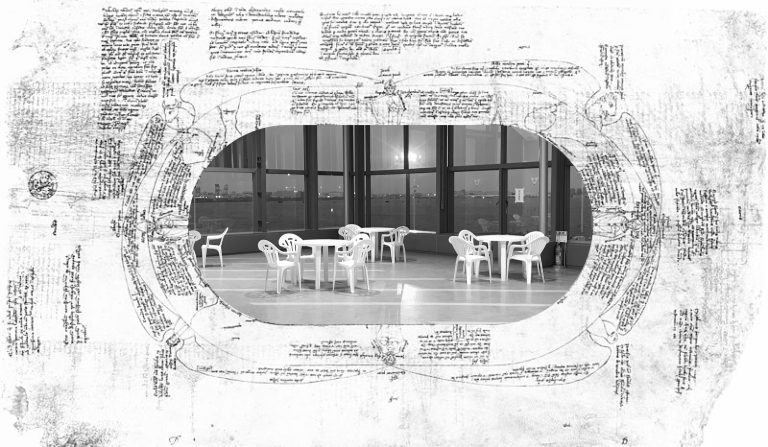
The Hyperrender of the mythologies of Lynetteholm 2070.
In this context, what does it mean to play with the capitalist logic? The Monopoly of the Baltic Sea in reality does quite the opposite – what starts as the purchase greed driven game, eventually turns into negotiations and discussions among actors about the real processes that drive the neglection of the sea space. How can a dialogue between a Baltic Cod and an offshore energy wind provider look like anyway? How spatial realities bring or oppose those interest and in which ways the growth logic is playing against itself?
Dear, hopefully our exchanges will demystify your ghosts.
Best,
Gabriele
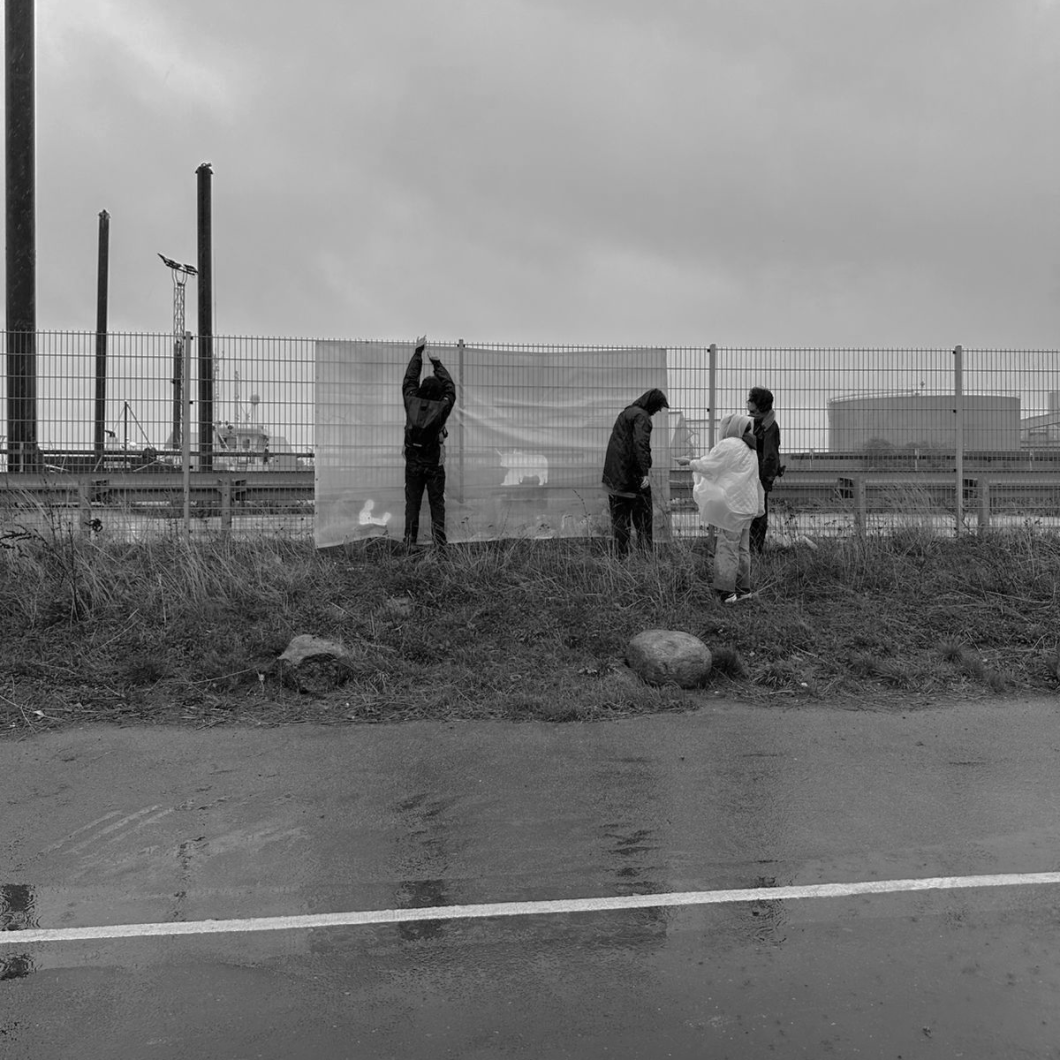
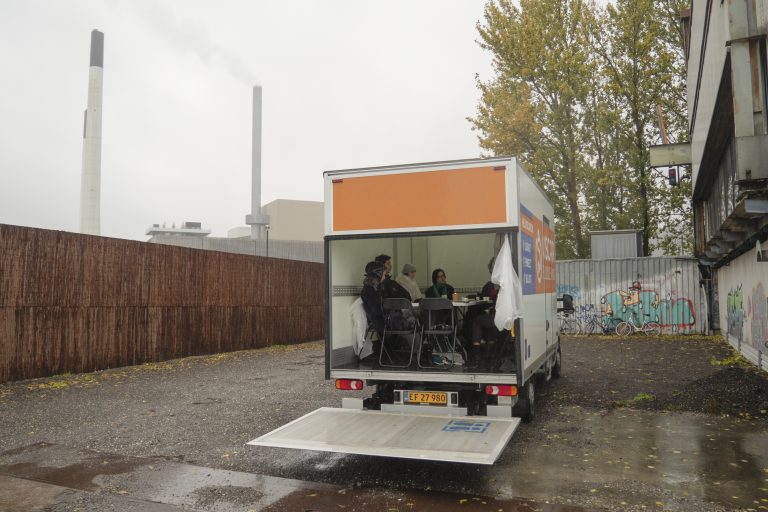
Lynetteholm 2070 hyper-render in Lynetteholm 2025.